Well, I am being snowed in today so it's a perfect opportunity to mess about at home. It was suggested to me after my Kuki entry yesterday to try my hand at roasting the twigs further, all good fun and the result being a heavily roasted tea!
I thought I would try my hand at roasting another twig that it used in more Oriental medicinal teas than any other hands down, gan cao or liquorice to the rest of us. It is used to tonify the Chinese concept of the spleen (a view which isn't just restricted to the Western spleen organ), moisten the Chinese 'lung' and also detoxifies and harmonises other herbs in formulas. Zhi gan cao is made by dry stir frying it with honey and is said to increase it's spleen and lung tonifying effects plus enhance it's effect on coughing.
The zhi gan cao supplied to me from my herb merchant is an industrially produced version that keeps for a long time, good for my stocks but it doesn't actually resemble real zhi gan cao. So with a dry wok in hand, some honey, liquorice and plenty of spare time I stirred away!
The results were very passable and even by itself quite tasty if not a little chewy. This, however, is a tea blog so I thought I would make some tea with it. My partner is a chronic spleen qi vacuity case borne out of her poor diet and overwork so with my new honey liquorice I prepared a batch of ren shen tang or ginseng decoction.
This tea is prepared in about a litre of water and boiled until about half remains which takes a good hour or so. It's an excellent tonic for those with poor digestion, loose stool and limbs that feel like they are lined with lead.
In this picture you can see the end result, the zhi gan cao on the left with the gan cao on the right. Preparing herbal medicinals is becoming a bit of a lost art nowadays, it's not really taught here in the West at colleges and most practitioners are buying their herbs in convenient granule forms that are easy to take. As well as honey roasting you can also prepare herbs with salt, vinegar, dried earth, baked; the list goes on. Tea bags destroy the enjoyment of the original plant, you don't get to touch, feel or smell it and it's the same with herbs.
Thanks for the suggestion to roast my Kuki! What if I honey roast ...
A fun experiment, in with the wok goes my more twiggy Kuki from Clearsprings, a dollop of honey and out she comes, my invention! Tetsubin at the ready I prepare the tea in one of my pots and I wait a few minutes to steep. The result? rather average if not slightly worst than rather average....
Still, one wouldn't know if one did not try.
Saturday, 18 December 2010
Friday, 17 December 2010
Kuki Hojicha (Ippodo Tea)
Not for the first time have I crossed paths with Kuki cha. My first exposure to this almost oxymoronic leafless tea was after hanging out with some macrobiotic friends that drink Kuki regularly as part of their dietary regime. It's none too difficult to obtain this tea in the UK from Clearsprings, a Japanese food brand and I have a bag of the stuff in my tea village (or cupboard if you may). Since I was ordering Matcha from Ippodo in Kyoto I also got myself a bag of this tea. It's cost effective and low in caffeine so it makes an excellent evening tea.
The aroma of this tea dry is anything but subtle, the bag absolutely assaults the nose like a prize boxer with a grudge to bear. Pop! 'ave that! ... ouch. I must be some sort of misguided masochist or something as I keep going back for another whiff. Sickly sweet like a pot of bubbling bramble jam is the only way I can put it.
Unsure of how to actually make Kuki properly, in a pot one presumes, I rebel and decide to brew it in a gaiwan with xiangbei cups. The blackberry jam aroma follows it with a liquorice under current, the caramel soup has lost a lot of the sweetness and holds an easy roasted malt with a nuttiness. The tea doesn't show much endurance beyond it's third infusion.
It's a cheap and simple thrill that is instantly scrummy and warming, just right for the cold winter. Perhaps this is the tea equivalent of a bag of chips smothered with salt and vinegar!
Tuesday, 14 December 2010
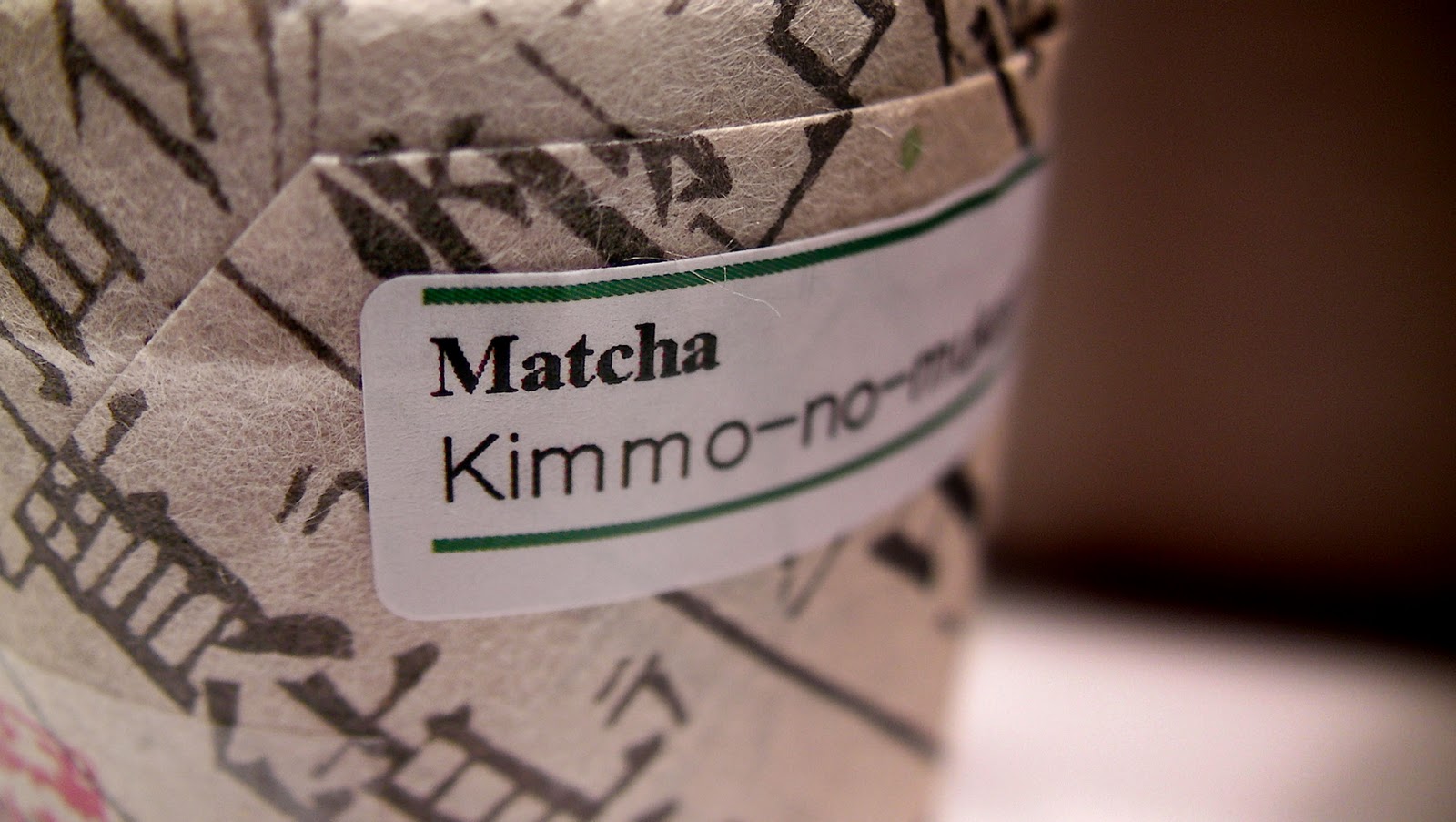
Kimmo-no-mukashi (Ippodo)
I suppose that one of the attractions of being a tea fan is just the sheer variety of teas in the world. You could spend a life time honing your tastes towards just one type of tea, discovering it's complexities year after year. I, however, just enjoy tea. There's nothing better than a nice cup of Earl Grey or an extended session with an old Pu Erh. Whatever your mood there is a tea to match.
I am currently on a challenge to myself right now, to learn more about Matcha. I could be mistaken but I think I drank my first bowl of Matcha in Uji, Japan. Not a bad place to start. The 'tea' street in Uji though is a rather tourist heavy spot and I'm sure the best places are in fact the ones hidden away in the back streets.
One of the best places to start with any sort of tea could well be with the really bad stuff, tea so bad that when you have some of the good stuff the difference knocks your socks off! As previously mentioned I have a rather large bag of the bad stuff in my fridge, it's essentially cooking Matcha. It's bitter, slightly yellow and thin. The next stop was Jing UK's Matcha which was very nice, very smooth and sweet. The first time I whisked it I was amazed just how the 'head' came out, thick and creamy like the head of a pint of stout!
I decided to source some from Kyoto's Ippodo store and forked out for their 'high quality' Kimmo-no-mukashi and 'premium quality' Wakamatsu-no-mukashi teas. The latter being twice the cost of the former. My original idea was to compare them side by side which worked out just fine when comparing the aromas of the powder. I actually prefer the cheaper Kimmo-no-mukashi, it was a little stronger, perhaps a little more pungent and had a heavy overtone of cooked banana with some white chocolate.
I don't think I'll be trying a side by side taste test again though. I am finding it quite difficult to discern the differences between similar Matcha without having the both of them over lapping each other. To my mind both of them tasted more bitter than Jing UK's. They did have plenty of complexity but I am just without the vocabulary to describe what I found. It's worth mentioning that the Kimmo-no-mukashi is a third of the cost (discarding postage) and the Wakamatsu-no-mukashi a little over two thirds of the Jing UK. It's a little like going back to square one with Pu Erh again. All rather frustrating when you can't describe what you feel. Whilst frustrated I am also as high as a kite after drinking both bowls.
Tomorrow morning I'll finish off the last of my Jing UK and see how it goes.
** next morning **
This morning's test consisted of drinking the Jing UK matcha then the Wakamatsu-no-mukashi. I wasn't imagining it, the Jing UK (I wish this tea had a name instead of calling it by the company) was much more sweet pea than banana in the aroma, thicker and smoother with the froth consisting of smaller bubbles and hence firmer. The Wakamatsu-no-mukashi was less pleasant on the palette, slightly sour cream, but had a longer sweeter after taste. The after taste (what is the Japanese for huigan?) is much more pronounced. Two bowls has left me awfully giddy, let's hope that I don't get the shakes as I have an acupuncture patient in an hour or so.
Hmmm, so I wonder. I preferred the taste and smoothness of the Jing UK but the Wakamatsu-no-mukashi was a more complex experience...
I am currently on a challenge to myself right now, to learn more about Matcha. I could be mistaken but I think I drank my first bowl of Matcha in Uji, Japan. Not a bad place to start. The 'tea' street in Uji though is a rather tourist heavy spot and I'm sure the best places are in fact the ones hidden away in the back streets.
One of the best places to start with any sort of tea could well be with the really bad stuff, tea so bad that when you have some of the good stuff the difference knocks your socks off! As previously mentioned I have a rather large bag of the bad stuff in my fridge, it's essentially cooking Matcha. It's bitter, slightly yellow and thin. The next stop was Jing UK's Matcha which was very nice, very smooth and sweet. The first time I whisked it I was amazed just how the 'head' came out, thick and creamy like the head of a pint of stout!
I decided to source some from Kyoto's Ippodo store and forked out for their 'high quality' Kimmo-no-mukashi and 'premium quality' Wakamatsu-no-mukashi teas. The latter being twice the cost of the former. My original idea was to compare them side by side which worked out just fine when comparing the aromas of the powder. I actually prefer the cheaper Kimmo-no-mukashi, it was a little stronger, perhaps a little more pungent and had a heavy overtone of cooked banana with some white chocolate.
I don't think I'll be trying a side by side taste test again though. I am finding it quite difficult to discern the differences between similar Matcha without having the both of them over lapping each other. To my mind both of them tasted more bitter than Jing UK's. They did have plenty of complexity but I am just without the vocabulary to describe what I found. It's worth mentioning that the Kimmo-no-mukashi is a third of the cost (discarding postage) and the Wakamatsu-no-mukashi a little over two thirds of the Jing UK. It's a little like going back to square one with Pu Erh again. All rather frustrating when you can't describe what you feel. Whilst frustrated I am also as high as a kite after drinking both bowls.
Tomorrow morning I'll finish off the last of my Jing UK and see how it goes.
** next morning **
This morning's test consisted of drinking the Jing UK matcha then the Wakamatsu-no-mukashi. I wasn't imagining it, the Jing UK (I wish this tea had a name instead of calling it by the company) was much more sweet pea than banana in the aroma, thicker and smoother with the froth consisting of smaller bubbles and hence firmer. The Wakamatsu-no-mukashi was less pleasant on the palette, slightly sour cream, but had a longer sweeter after taste. The after taste (what is the Japanese for huigan?) is much more pronounced. Two bowls has left me awfully giddy, let's hope that I don't get the shakes as I have an acupuncture patient in an hour or so.
Hmmm, so I wonder. I preferred the taste and smoothness of the Jing UK but the Wakamatsu-no-mukashi was a more complex experience...
Monday, 6 December 2010
Winter greens..
Should we drink green tea in Winter? I suppose the energetic purists amongst us would say no, it's not the season for it. Winter is dark, cold and is all about root vegetables as opposed to a nice fresh salad. But we live in a land of loft insulation and radiators so why not crank up the heating and enjoy something green? As you can see by my pictures I have something new to drink tea out of and I thought I'd show it off a bit.
Hagi ware (or Blobby-ware™) was something I was quite unsure about when I first saw it whilst perusing various tea blogs (the Sip-Tip was the likely source). I have to admit I thought it looked rather naff. Time went by though and those chaotic blobs started to grow on me but the fact that I didn't really like matcha too much and I associate Hagi with that unusual green frothy brew more so than regular green tea, meant that I didn't bother purchasing a bowl. The prices on various websites for Hagi put me right off too!
I must admit to having a rather large bag of rather awful matcha. Occasionally I would froth some up with my electric whisker gadget and gulp it down with the knowledge that it was good for me as opposed to actually interesting my taste buds. I finally got around to purchasing a chasen whisk and despite my most frantic efforts I couldn't get the damn stuff to froth up with it!
There must be more to this though I pondered so I decided to shell out for some better matcha. Without a clear idea where to actually buy good matcha I went to Jing UK to purchase theirs. **edit** Sure, Jing UK have been accused for marking up their pu erh prices as noted by the blogging stalwart Hobbes, but the tea they sell is always reasonable at the very least and the postage quick. **edit-see comments**
I was genuinely surprised just how much difference there was, this time around the matcha was smooth, it frothed well and had a decent green pea flavour. All of a sudden I'm interested and in my flurry of interest I got myself my new Blobby-ware™ bowl from Japan. The textures of the bowl makes the experience a more tactile affair but I wish it was heavier and gravity left me really grasping it's odd surface. The price of matcha makes repeated bowls an insanely expensive tipple so I don't have much chance to really appreciate the moment, it's a little fleeting.
I would like to delve a little deeper into both matcha and Hagi.. where would you suggest?
Thursday, 30 September 2010
Jin De Zhen tea set
I have been slumming it somewhat with my various gaiwans and cups since I started my little tea fetish. As with all hobbies I guess at first glance the prices of the finer things are shocking but after time one's 'price gag reflex' starts to relax and we spend ever increasing amounts. So I have been getting by on some rather average gaiwans that was until today when my Jin De Zhen tea set came to visit.
The set comprised of a gaiwan, jug and six cups with matching fragrance cups at a total cost of about £62. I must say that I was very much drawn towards the use of fragrance cups after seeing them in Hobbes' excellent tea blog. After much searching around the internet I didn't find much to choose from and settled for a non glazed set which Nada had lying about but the naked clay seemed to absorb the aromas. Do I need six cups? no, but as it came as a set I decided to go 'all in'.
Whilst not hugely priced this is a very decent tea set for the money. Perhaps it is all in my mind but I have really enjoyed my first session, the more subtle flavours in the soup were easier to discern, the huigan improved and the smoothness of the cups as they touched my lips gave me an extra dimension to each sip. Today was a good day for drinking tea.
Why didn't I invest earlier?
Tuesday, 21 September 2010
Our little London trip
It's one of those things, I take my girlfriend to see Camden Town in London, a busy market renown for quirky fashion, in your face food stall sellers and dodgy dudes hawking oregano in little plastic baggies. We spent a good couple of hours mooching around, I was happy to just tag alongside until I caught sight of some teapots.
"Tea!!!" I proclaimed and off I scuttled, probably showing the first real interest in the afternoons browsing. Somewhere near the very northern edge of the stables area of Camden was a little tea shop specialising in matcha and other Japanese green teas. For about three quid or so a drink, we sat down with a matcha and a more fancy genmaicha matcha latte with the usual complimentary sweet tit bits that come with it. The fare was actually kinda ordinary, but this is Camden after all and it provided me with a welcome little tea break away from the usual Camden garb.
Next stop, Vitaorganics in the Soho district, an oasis of good nutritional vegan food and a favourite place of mine to eat when I'm in the area. I just feel better about myself after eating there. Again for three quid or so I ordered a pot of kukicha as the day was dragging on and I felt like avoiding caffeine. Out came a small tetsubin pot of quite tasty kukicha resplendent with nuttiness and sweetness. I had a peep inside the pot for the twigs only to be disappointed with naught. It's not a fancy tea nor complex but it's thick caramel soup kept me entertained whilst I munched away and watched the unusual locals go about their unusual Soho lives.
Sometimes it is not really about the tea you drink but the experience around it that lingers in the memory for the years that pass us by. I think I might have some more matcha and kukicha soon.
Monday, 6 September 2010
Why do I drink tea?
| An odd hobby? |
It is an odd hobby I suppose, drinking cow pat shaped lumps of tea that can cost more than gold but there is little about my choice of past times that could be considered mainstream.
| You begin to notice things in greater detail |
I guess the main reason why is that I have the chance to develop an appreaciation for something elusive and fine. By seeking such I also have a chance to reflect inwardly upon myself which is a gift. Lastly, and most unexpectedly, I have met new friends, again a great gift.
Why do you drink tea?
Subscribe to:
Posts (Atom)