Monday, 7 February 2011
Xiaguan Elegant Frisbee 2008
I'm back into the groove of drinking pu erh again. Today's bing has something of a toy like attraction to it, I say that because holding this cake after the chubby, flakey Ding Xing has really intrigued me. The iron compression so typical of Xiaguan has rendered the leaves into a tea frisbee! It's hard and well defined, it's edges are cutting and sharp. I have no doubt that if I were to venture down to the park today I could let loose and this baby would fly.
Fearing that my cha dao would be repelled by the tight weave of the tiny leaves I plunged into it and found that a 15 gram lump easily came off, (in a Homer style) mmm tobacco. Calculating one third I plopped it into my pot admiring the silver tips as it went in. One quick rinse and off we go.
I have had some quite aromatic teas in the last week or so so I was expecting some more fireworks out of my fragrance cup but there wasn't a whole lot going on first up. The smell reminded me of something from my childhood, hot orange cordial. The second infusion woke up the Benson and Hedges in this tea and it suddenly become very, very tobacco. It's orange hue soup was a little more rough and ready than I was expecting but led itself into a very interesting huigan that gripped my tongue.
I pushed the brewing a little further, a little brave considering how brutish the tea was. The outcome was an even heavier tobacco kick with more perfume, a quick cooling sensation on the lips and a much stronger huigan. I'm quite amused by the gripping feeling on my tongue. It doesn't last forever though, I'm not sure of how many infusions I made but my 1.5 litre bottle of Evian is nearly done.
How would such a tea age? I am most curious. I was given possible sneak preview of how my belolved but rather scary Nada Bulang would turn out by sampling Nada's Heng Li Chang Bu Lang. I know very little about Xiaguan teas and I would love to know of a sample that would give me a heads up on how Father Time would treat this tea.
A very worthwhile tea that is full of character in it's form and also in it's soup. I mean, isn't pu erh just great? It's an almost endless journey of discovery.
** It is at this point that I realise that I have already, in fact, blogged this tea in sample form. It turns out that I didn't really care for it much first time around. Perhaps my ability to appreciate tea has grown over the last year or so, or perhaps I just had an off session. I am certainly enjoying my life a lot more now than then and that could have a huge impact on how much I bond with my tea **
Thursday, 3 February 2011
Old Notorious Ding Xing
Along comes a tea once in a while that causes a bit of a stir. It's not because of it's excellence, everyone agreed that it's pretty good for the price, but it is because it has some controversy and is also pretty cheap. The controversy over this cake is it's age and that it comes from a slightly shady seller, not as shady as the geezer that sells little bags of herbs openly in public on Camden Town bridge but someone still of questionable repute. Cheap to boot too as you could score these for puppies for about £20 I believe on Taobao and much kudos to Hobbes for giving us advice on how to purchase them, even more kudos for updating his blog on this cake's availability at Pu Erh Shop. So off to Pu Erh Shop I went and picked up a couple. I'm not as bigger collector as some so I tend to buy one for keeps and one to drink.
The wrapping has been eaten somewhat by bugs or what have you, one of my cakes much more than the other so I chose the most tarnished cake (chubby little bugger) for my drinking cake. I inspected it for frosting and there was just the slightest hint and with a swish of my knife the leaf happily crumbled off. Being about ten years old is a funny old age for pu erh, past it's teenage years the leaf has some signs of maturity but you can appreciate how it must of looked when it was new. I popped about 5 grams into a gaiwan for brewing and gave it a rinse and was immediately greeted by those pleasant woody aromas.
This tea is very nice, I must say that I like it a lot. It's very smooth in the mouth and after an abortive attempt where the flavour rose no further than my throat, it has given me an extremely rewarding huigan full of peach. The cha qi is also very noticeable, uplifting to the eyes and forehead early on and then settling to warm my middle jiao followed by warmth creeping to my upper jiao. How rewarding this session is!
My collection is made up of teas mainly between the 2007 to 2010 range and although I occasionally pick up small quantities of old tea I didn't have any cakes younger than 2006. Given it's availability and price I heartily recommend picking up some of this tea before it goes.
Tuesday, 1 February 2011
Tea in Abu Dhabi
I am lucky enough to have a 'day job' that gives me the opportunity to travel the world and also earn a reasonable living. I was delighted to discover then that Wasps rugby union team had moved a game from their industrial estate bound ground in High Wycombe to Abu Dhabi, more so that it gave me a chance to escape the sub zero temperatures. I'm no sun lizard, my skin is rather opaque but my joints are getting creakier by the year and the sun is a marvellous tonic.
Our hotel and ground was at the very luxurious Palace Hotel, every inch an effort to demonstrate just how much money the sheiks have at their disposal but in reality a soulless monstrosity built by the hands of down trodden Indian and Pakistani workers. I have a real gripe with what you see behind the scenes in places like Abu Dhabi and Dubai.
Tucked away in one corner of the beach (resplendent with it's imported sand) was an opportunity to sample something missing from the rest of the complex, some culture! Even more surprising was that it was entirely free, not a room number request in sight. In an open sided tent sat a local man who spoke little english.
"Come! Come!" he said as he waved, "Sit, rest."
He surrounded himself with various pots, some tongs and a supply of charcoal and it was his job to brew tea and coffee whilst people waited to ride camels.
"Tea? Coffee?" was the cue for my face to light up and a few moments later I was the proud owner of a glass of tea. I no longer felt compelled to mooch about the hotel grounds and I grabbed my opportunity to sit back and read a translation with commentaries of the Nan-Ching (nan jing for those pin yin minded people) by the thorough sinologist Paul Unschuld.
The brew was exactly how I wouldn't prepare tea, sweeter than a sherbet fountain but despite this I enjoyed it immensely, vive la difference! My new friend seemed very insistent that I had some coffee too which was also unusual. It came in a cup not much bigger than my chinese tea cups and had a heavy flavour of mint through it.
A place must be a good place if you have no idea how long you spent there. I read my book (or as much of it as I could absorb, which isn't a lot when it comes to Unschuld) and drank several cups of tea and coffee. Along came an offering of a few dates and I found out through sign language that the man had a real interest in camel racing. Sign language doesn't take you very far and he went back to fanning his coals and brewing more tea.
I walked away feeling very content with the experience, it was genuine and enriching, a saving grace for the hotel that up to that point had little to offer anything beyond skin deep. I went back there again the next morning and saw my friend who greeted me with the same words and I watched him light his fire and prepare his drinks. Work intervened and I was drawn back into the hotel's grasp.
Drinking tea is becoming more about the moment of the tea as opposed to the tea itself, that is the true gift it brings me.
Thursday, 27 January 2011
A lot of do about Qi
Hmmm, it's happened again, I have gone on the tea buying rampage. From Xiaguan to Douji to the now notorious Dingxing cake, it's all on it's way inbound to The Corn Barn (that's where I live).
I thought I would write something about the topic of 'qi' and my opinion on what it is (this is the sort of thing that crosses my mind on a day off sitting at my tea table). In fact, the inspiration for this was all started by a marvelous sensation in my chest which I squarely attribute to Nada's Bulang which I am revisiting today. A lot is said about cha qi, but what on earth is 'qi'?
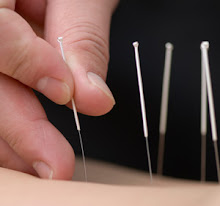
Although I am a practicing acupuncturist and herbalist one thing I am not is a member of the spiritual hippy brigade! There is a type of person that is attracted to practicing acupuncture in the west and they are usually middle aged females with a new age, spiritual aspect to them (85% of students at my old acupuncture college fit this stereotype). As a result one of the core concepts of Asian medicine, qi, is rather over romanticised. It need not be.
Do you have to 'believe' in qi? No, not if you have a pair of eyes and nerve endings. Qi describes anything with motion, temperature and function. When you lift your arm and scratch your nose, it is qi. Regardless of the actual biomechanical function that enables you to move you will be perfectly correct in stating that it was an act of qi, it moved thus it was a result of some qi.
You can't grasp it as it is formless. You can grasp your moving arm but that is the substance you have just touched, you have not touched the movement itself. Heat plus water creates steam, you can touch the steam, feel the heat but all that is on your skin is the water. You can touch flames but you can't hold them.
Peristalsis, the movements of your gastrointestinal tract is just another thing that can be labeled qi, it makes you poop and it makes you burp. This isn't magic we are talking about, it's just a word that embodies anything that moves be it the rain or your mood.
Anger, it makes you so mad your face goes red! You want to stand up and punch the nearest inanimate object. You could explain the exact process that flushes blood to your face or you could use the Chinese abstract physiological model that anger belongs to the liver, liver belongs to the wood phase, the wood phase surges upwards and this is why your blood goes to the face and you feel so animated. Is it strictly accurate? no but it does the job of understanding the relationship of things.
So, what is cha qi? If you feel it and it has a moving quality to it, a temperature then you are perfectly correct in explaining it as an expression of qi without having to wear hemp trousers and meditate. Of course, if you like hemp trousers and meditation you can do that too.. ;-)
Rant over.
I thought I would write something about the topic of 'qi' and my opinion on what it is (this is the sort of thing that crosses my mind on a day off sitting at my tea table). In fact, the inspiration for this was all started by a marvelous sensation in my chest which I squarely attribute to Nada's Bulang which I am revisiting today. A lot is said about cha qi, but what on earth is 'qi'?
Although I am a practicing acupuncturist and herbalist one thing I am not is a member of the spiritual hippy brigade! There is a type of person that is attracted to practicing acupuncture in the west and they are usually middle aged females with a new age, spiritual aspect to them (85% of students at my old acupuncture college fit this stereotype). As a result one of the core concepts of Asian medicine, qi, is rather over romanticised. It need not be.
Do you have to 'believe' in qi? No, not if you have a pair of eyes and nerve endings. Qi describes anything with motion, temperature and function. When you lift your arm and scratch your nose, it is qi. Regardless of the actual biomechanical function that enables you to move you will be perfectly correct in stating that it was an act of qi, it moved thus it was a result of some qi.
You can't grasp it as it is formless. You can grasp your moving arm but that is the substance you have just touched, you have not touched the movement itself. Heat plus water creates steam, you can touch the steam, feel the heat but all that is on your skin is the water. You can touch flames but you can't hold them.
Peristalsis, the movements of your gastrointestinal tract is just another thing that can be labeled qi, it makes you poop and it makes you burp. This isn't magic we are talking about, it's just a word that embodies anything that moves be it the rain or your mood.
Anger, it makes you so mad your face goes red! You want to stand up and punch the nearest inanimate object. You could explain the exact process that flushes blood to your face or you could use the Chinese abstract physiological model that anger belongs to the liver, liver belongs to the wood phase, the wood phase surges upwards and this is why your blood goes to the face and you feel so animated. Is it strictly accurate? no but it does the job of understanding the relationship of things.
So, what is cha qi? If you feel it and it has a moving quality to it, a temperature then you are perfectly correct in explaining it as an expression of qi without having to wear hemp trousers and meditate. Of course, if you like hemp trousers and meditation you can do that too.. ;-)
Rant over.
Thursday, 20 January 2011
Five in one, 五味子
Again, a little bit off the usual tea topic, I thought I would would sing the praises of a medicinal herb. It's a real favourite of mine, wŭ wèi zĭ or schisandra fruit.
The first place to look if you really want to get to know a herb is in the classics. Chinese medicine has arguably been going more backwards than forwards since the Han dynasty. The majority of herbal formula still used today originate from this time and many modern formulas are based on classical ones (you can instantly tell the ones that don't). Zhang Zhong Jing, the author of the Han classic the Shang Han Lun, took his knowledge straight from the Shen Nong Ben Cao Jing, and it is in this classic we first examine this herb.
Wu Wei is sour and warm. It mainly boosts the qi, treating cough and counterflow qi ascent, taxation damage, and languor and emaciation. It supplements insufficiency, fortifies yin, and boosts male's essence. It grows in mountains and valleys.
Although it has a sour energetic, it actually has all the five tastes on the palette, hence the name one presumes. Sour is the representative taste of the wood element the theory classic, the Nei Jing, tells us that sour tonifies the metal element. You can imagine the movement of sour being analogous to breathing in, it is an inward, conserving dynamic. Certainly when you breath in you are boosting your qi via the lung (lung being a metal element organ) and if you don't believe me I suggest you reverse the process by breathing out and go for a sprint.
Zhang Zhong Jing primarily used schisandra as a modification herb, it was added to formula if certain symptoms were present and in the case of schisandra it was used for coughing. Throughout the Shang Han Lun you see it paired with dried ginger and wild chinese ginger which added the effect of drying and warming the lung for wet coughs.
It supplements insufficiency, fortifies yin, and boosts male's essence.
Broadly speaking, yin is a term for material bodily fluids and essence relates to sexual fluids. But from a Chinese perspective how does this work? Using a five element model we already understand that the sour dynamic tonifies the metal element. Part of that element is the lung and the concept that the lung is the upper source of water in the body and that the metal element is in charge of downward movement. When we tonify metal we are able to manifest water and descend it downwards towards the kidney, resonant with the water element and sexual function. This is a classic example of the five element sheng 生 cycle where metal gives birth to water.
I love this herb, it tackles cough very well and also gives off a nice dark fruit flavour to formula. TCM practitioners also note it's ability to curb sweating, stop diarrhea, spermatorrhea and many more uses. I'm a bit old school so I'm keeping with it's original Han dynasty use.
Saturday, 18 December 2010
Making Zhi Gan Cao
Well, I am being snowed in today so it's a perfect opportunity to mess about at home. It was suggested to me after my Kuki entry yesterday to try my hand at roasting the twigs further, all good fun and the result being a heavily roasted tea!
I thought I would try my hand at roasting another twig that it used in more Oriental medicinal teas than any other hands down, gan cao or liquorice to the rest of us. It is used to tonify the Chinese concept of the spleen (a view which isn't just restricted to the Western spleen organ), moisten the Chinese 'lung' and also detoxifies and harmonises other herbs in formulas. Zhi gan cao is made by dry stir frying it with honey and is said to increase it's spleen and lung tonifying effects plus enhance it's effect on coughing.
The zhi gan cao supplied to me from my herb merchant is an industrially produced version that keeps for a long time, good for my stocks but it doesn't actually resemble real zhi gan cao. So with a dry wok in hand, some honey, liquorice and plenty of spare time I stirred away!
The results were very passable and even by itself quite tasty if not a little chewy. This, however, is a tea blog so I thought I would make some tea with it. My partner is a chronic spleen qi vacuity case borne out of her poor diet and overwork so with my new honey liquorice I prepared a batch of ren shen tang or ginseng decoction.
This tea is prepared in about a litre of water and boiled until about half remains which takes a good hour or so. It's an excellent tonic for those with poor digestion, loose stool and limbs that feel like they are lined with lead.
In this picture you can see the end result, the zhi gan cao on the left with the gan cao on the right. Preparing herbal medicinals is becoming a bit of a lost art nowadays, it's not really taught here in the West at colleges and most practitioners are buying their herbs in convenient granule forms that are easy to take. As well as honey roasting you can also prepare herbs with salt, vinegar, dried earth, baked; the list goes on. Tea bags destroy the enjoyment of the original plant, you don't get to touch, feel or smell it and it's the same with herbs.
Thanks for the suggestion to roast my Kuki! What if I honey roast ...
A fun experiment, in with the wok goes my more twiggy Kuki from Clearsprings, a dollop of honey and out she comes, my invention! Tetsubin at the ready I prepare the tea in one of my pots and I wait a few minutes to steep. The result? rather average if not slightly worst than rather average....
Still, one wouldn't know if one did not try.
I thought I would try my hand at roasting another twig that it used in more Oriental medicinal teas than any other hands down, gan cao or liquorice to the rest of us. It is used to tonify the Chinese concept of the spleen (a view which isn't just restricted to the Western spleen organ), moisten the Chinese 'lung' and also detoxifies and harmonises other herbs in formulas. Zhi gan cao is made by dry stir frying it with honey and is said to increase it's spleen and lung tonifying effects plus enhance it's effect on coughing.
The zhi gan cao supplied to me from my herb merchant is an industrially produced version that keeps for a long time, good for my stocks but it doesn't actually resemble real zhi gan cao. So with a dry wok in hand, some honey, liquorice and plenty of spare time I stirred away!
The results were very passable and even by itself quite tasty if not a little chewy. This, however, is a tea blog so I thought I would make some tea with it. My partner is a chronic spleen qi vacuity case borne out of her poor diet and overwork so with my new honey liquorice I prepared a batch of ren shen tang or ginseng decoction.
This tea is prepared in about a litre of water and boiled until about half remains which takes a good hour or so. It's an excellent tonic for those with poor digestion, loose stool and limbs that feel like they are lined with lead.
In this picture you can see the end result, the zhi gan cao on the left with the gan cao on the right. Preparing herbal medicinals is becoming a bit of a lost art nowadays, it's not really taught here in the West at colleges and most practitioners are buying their herbs in convenient granule forms that are easy to take. As well as honey roasting you can also prepare herbs with salt, vinegar, dried earth, baked; the list goes on. Tea bags destroy the enjoyment of the original plant, you don't get to touch, feel or smell it and it's the same with herbs.
Thanks for the suggestion to roast my Kuki! What if I honey roast ...
A fun experiment, in with the wok goes my more twiggy Kuki from Clearsprings, a dollop of honey and out she comes, my invention! Tetsubin at the ready I prepare the tea in one of my pots and I wait a few minutes to steep. The result? rather average if not slightly worst than rather average....
Still, one wouldn't know if one did not try.
Friday, 17 December 2010
Kuki Hojicha (Ippodo Tea)
Not for the first time have I crossed paths with Kuki cha. My first exposure to this almost oxymoronic leafless tea was after hanging out with some macrobiotic friends that drink Kuki regularly as part of their dietary regime. It's none too difficult to obtain this tea in the UK from Clearsprings, a Japanese food brand and I have a bag of the stuff in my tea village (or cupboard if you may). Since I was ordering Matcha from Ippodo in Kyoto I also got myself a bag of this tea. It's cost effective and low in caffeine so it makes an excellent evening tea.
The aroma of this tea dry is anything but subtle, the bag absolutely assaults the nose like a prize boxer with a grudge to bear. Pop! 'ave that! ... ouch. I must be some sort of misguided masochist or something as I keep going back for another whiff. Sickly sweet like a pot of bubbling bramble jam is the only way I can put it.
Unsure of how to actually make Kuki properly, in a pot one presumes, I rebel and decide to brew it in a gaiwan with xiangbei cups. The blackberry jam aroma follows it with a liquorice under current, the caramel soup has lost a lot of the sweetness and holds an easy roasted malt with a nuttiness. The tea doesn't show much endurance beyond it's third infusion.
It's a cheap and simple thrill that is instantly scrummy and warming, just right for the cold winter. Perhaps this is the tea equivalent of a bag of chips smothered with salt and vinegar!
Subscribe to:
Posts (Atom)